What Happens to Our Wildlife When the Bluffs Disappear?

Updated: Feb 18
The mesa tops and surrounding bluffs in Lone Tree where developers are propsing the Hillcamp subdivision are not empty land. They are home to a complex, functioning ecosystem that includes coyotes, hawks, owls, small mammals, prairie dogs, reptiles, pollinators, and seasonal migratory species along with larger animals like elk and deer. These animals rely on the open grasslands, canyon drainages, and connected bluffs for food, shelter, movement, and survival.
Anyone who spends time along the East–West Trail has seen this ecosystem in action: coyotes moving at dawn and dusk, hawks circling overhead, foxes and rabbits darting through the grasses, and the subtle but constant movement of life that tells you this land is working as it should.
In 2022, residents traveling along the East–West Trail just east of I-25 could also regularly spot pronghorn — often called the American antelope — near Schweiger Ranch and along the trail corridor. Seeing wildlife so close to our neighborhoods wasn’t just a pleasant surprise. It was a reminder that Lone Tree exists alongside an active, living landscape that still functions as habitat.
Today, those pronghorn sightings have basically disappeared.
Whether they were displaced by increasing disturbance, habitat fragmentation, or cumulative development pressure, their absence raises a critical question: what happens when wildlife habitat is steadily chipped away — until it no longer functions at all?
We Already Know These Lands Matter for Wildlife
Just south of Lone Tree, the Highlands Ranch Backcountry Wilderness Area closes every year from January 1 through March 31 to protect wintering wildlife. Portions of the Wildcat Mountain Trail and the East–West Trail remain closed well into summer — often through September 1 — to protect nesting and breeding golden eagles.
These closures follow U.S. Fish and Wildlife Service guidelines. They exist because wildlife need space, quiet, and continuity to survive.
If trails must be closed to protect wildlife activity, we must ask: What happens when a large residential development moves directly into this same landscape?
Hillcamp Raises Unanswered Wildlife Questions
The proposed Hillcamp development would place hundreds of homes, roads, sidewalks, streetlights, fencing, and utilities into one of the last remaining undeveloped bluff-top landscapes in Lone Tree.
What happens to our elk herd? What happens to golden eagles that nest and hunt in this area?
The developers assert that elk, deer and other aniamls will simply move through a narrow corridor squeezed between existing neighborhoods and the proposed community. That claim deserves serious scrutiny.
Wildlife does not adapt on command. Migration routes are not interchangeable. Once established corridors are severed or degraded, they are often lost permanently.
Even Hillcamp's own wildlife planning language acknowledges the presence of pinch points and narrow corridors — precisely the locations where conflicts increase due to fencing, lighting, pets, noise, and traffic. The real question is not whether a single animal can pass through once, but whether entire herds can maintain reliable movement patterns year after year as human disturbance increases.
Where Is the Independent Wildlife Review?
The developer has submitted its own Wildlife Preservation Plan, but it remains unclear whether Colorado Parks and Wildlife (CPW) or another qualified independent agency has been formally consulted to assess site-specific impacts.
At a minimum:
The public record should clearly document whether CPW or another independent expert has reviewed this site.
If such consultation has not occurred, it must be required before approvals proceed.
If consultation has occurred, the City should publish CPW’s written input, corridor mapping, and any recommended buffers or mitigation measures.
The absence of transparent, independent review should alarm every resident.
Fragmenting Multiple Watersheds at Once
Hillcamp’s impacts extend far beyond a single development footprint.
As currently proposed, the project would fragment multiple watersheds simultaneously, compounding ecological harm. The plan includes trenching utilities and pumping water uphill through a canyon off Surrey Drive. This canyon is composed of three interconnected drainages that support wildlife year-round.
To the west and north, in an entirely separate, never-before-developed watershed that feeds Cottonwood Creek, plans include a new access road, sidewalks, lighting, and a large bridge. An additional emergency vehicle access point would create yet another watershed cut through MacArthur Ranch.
This is not a minor disturbance.It is a complete transformation of the landscape.
Wildlife depends on continuous, undeveloped watershed corridors for movement, shelter, and seasonal migration. Fragmenting multiple watersheds at once collapses those corridors from several directions simultaneously.
There Is a Better Alternative
If this development must proceed, impacts on wildlife must be minimized using sound science — not assumptions.
At a minimum:
Utilities and all vehicle access should be confined to a single watershed.
Infrastructure should be consolidated into one disturbed corridor to reduce fragmentation.
Larger intact habitat areas should be preserved to maintain functional wildlife movement.
This alternative must be fully and transparently evaluated before irreversible approvals are granted.
We Have Seen This Before
The pronghorn that once lived in the RidgeGate East area of Lone Tree are gone.
That loss should serve as a warning — not a footnote. Large-scale development like Hillcamp will leave wildlife displaced, disoriented, or forced into dangerous proximity with people, pets, and traffic. Once these landscapes are built over, the damage cannot be undone.
A Community That Cares
The Bluffs — and the wildlife that depend on them — are not an obstacle to progress. They are part of Lone Tree’s identity.
Protecting them does not mean opposing growth. It means insisting on responsible stewardship, independent science, and decisions that recognize what is at stake.
Let’s not sacrifice animals like our elk and golden eagles the way we lost the pronghorn.
Before it’s too late, the City must require comprehensive, independent wildlife studies and seriously evaluate alternatives that preserve intact habitat and functional corridors.
Some losses cannot be rebuilt.Some warnings should not be ignored.
A porcupine in brush that borders Hillcamp's property line. Deer share grazing space with cattle on top of the mesas. A majestic elk stands in open space that would be destroyed for a road leading to Hillcamp. Black bear cub stalks food in the current open space south of where Hillcamp would go. A lone wolf looks at Cottonwood Creek which is directly south of the proposed Hillcamp site. A bobcat prowls a Lone Tree driveway south of where Hillcamp is slated to go.

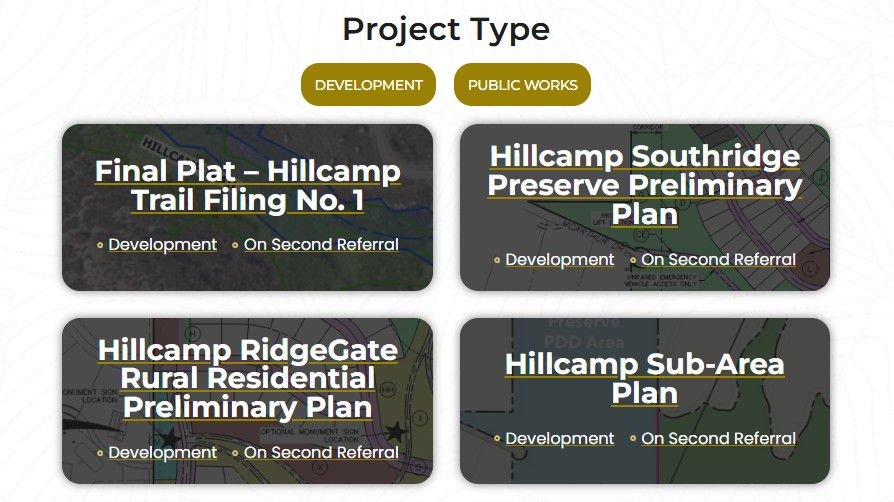

Comments with extensive bibilographies were submitted on wildlife and hydrological issues. Hope it helps.
Thank you for this excellent summary of wildlife impact. Where is the petition?